The Flatheaded Borer Working Group
|
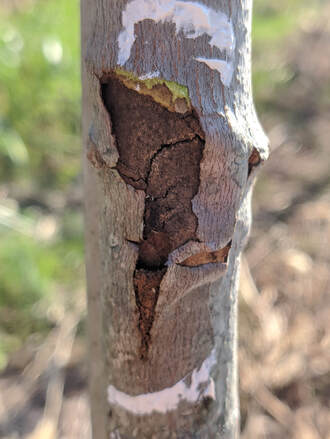
In recent years, flatheaded borer damage has become more pronounced in specialty tree crops in landscape, nursery, fruit and nut orchards. In 2019, a workshop was held to bring research and extension experts together with stakeholders to identify grower needs and gaps in knowledge. In 2020, the flatheaded borer working group received funding from the USDA-Specialty Crop Research Initiative to conduct a multi-state, coordinated research program aimed at identifying best management practices for flatheaded borers impacting specialty crops.
|
What are Flatheaded Borers?
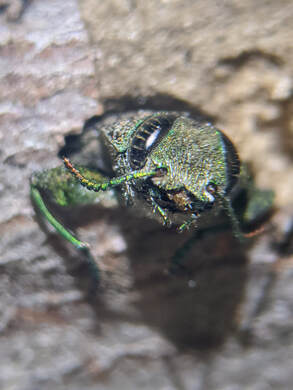
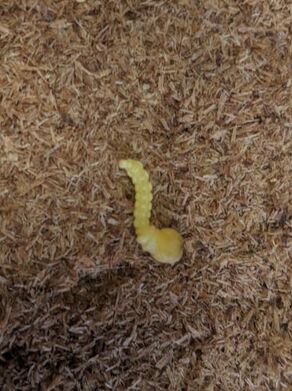
Flatheaded borers are wood boring beetles in the family Buprestidae. Adults can be charismatic and are commonly referred to as jewel beetles. The larval stages have a large, flattened anterior region giving them the appearance of a flattened head. The larvae feed on the inner bark tissue. Buprestids are part of the natural decomposition process of dead woody plant material. However, there are some species of buprestids that will attack living trees that are weakened by transplant or drought stress. These species can be problematic in landscapes and agricultural systems.
Flatheaded Borer Damage in
|
Chrysobothris Borers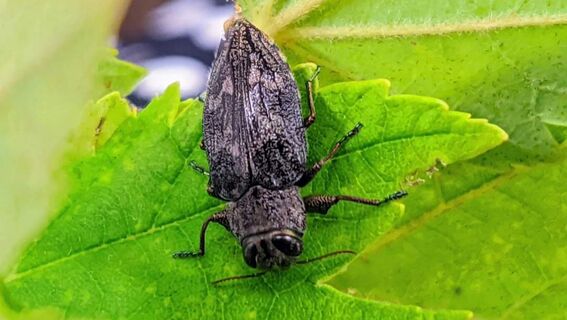
Native borers in the genus Chrysobothris are widespread across North America. Species in this genus have been reported as pests from time to time over the course of the 20th century. In recent years, some species such as the flatheaded appletree borer (Chrysobothris femorata) and the Pacific flatheaded borer (Chrysobothris mali) have become more frequent problems in production systems. Due to their close relationshipd and similarities in their behavior, it is believed that management practices developed for one species can translate to other species and regions as well.
|
This material is based upon work that is supported by the National Institute of Food and Agriculture, U.S. Department of Agriculture, Specialty Crop Research Initiative under award number 2020-51181-32199. Any opinions, findings, conclusions, or recommendations expressed in this publication are those of the author(s) and do not necessarily reflect the view of the U.S. Department of Agriculture. Last Updated April 2022.
